

Keynote Speakers & Tutorials
Distinguished experts in power flow control, smart grids, digital twins & renewable energy
4–6 December 2026 | NIT Rourkela, Odisha, India
Keynote & Tutorial Speakers
Select a speaker to view their full abstract and biography

Keynote Speaker
Opening perspective from an industry pioneer
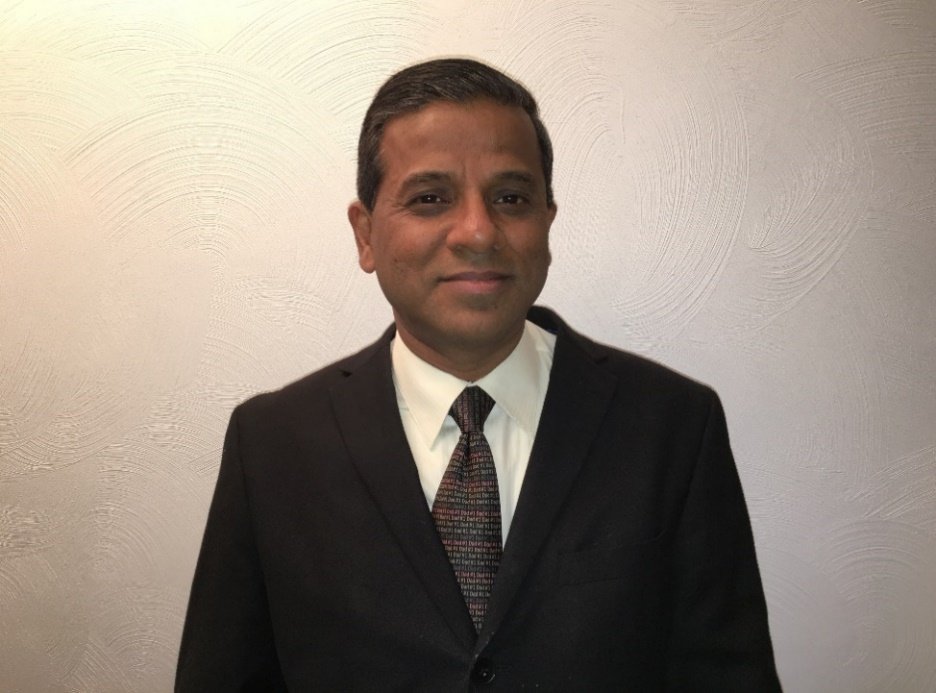
Kalyan K. Sen
PhD, PE, MBA, IEEE Life Fellow
Fulbright/GIAN Scholar · IEEE PES Distinguished Lecturer · IEEE SSIT President-Elect
President & CTO, Sen Engineering Solutions, Inc.
www.sentransformer.com
Modernizing the Grid — the Missing Link
The use of electricity is increasing rapidly due to the fast adoption of mega-sized data centers, electric vehicles, etc. To combat the greenhouse effect, the generation of renewable energy is also skyrocketing. However, the other important piece of the puzzle is to transport electricity from where it is generated to where it is used in load centers in the most reliable, efficient and affordable way. The power industry's pressing need to transfer bulk power along a desired path may be met by building new transmission lines, which is a long and costly process. Alternatively, it may be quicker and cheaper to identify the underutilized transmission lines and harness their dormant capacity to increase the power flows to the lines' thermal limits by using a properly designed power flow controller. Also, the grid congestion can be mitigated by holding the power flow in a line at its design limit, instead of tripping the line and possibly initiating a cascaded failure of the grid as it happened in 2003.
Power Electronics at its Best in High Voltage, High Power Applications
Electric power sources are frequently located away from population centers. Therefore, the electricity must be transported from the power sources to consumers through transmission and distribution lines. The voltage changes its magnitude and phase angle at any point along a line due to the voltage drop across the line impedance, which is caused by the flow of current in the line. However, the voltage at a point-of-common-coupling with a load must be maintained within the regulatory limits. Voltage regulation techniques have been practiced in power grid applications with the use of inductors, capacitors, transformers and load tap changers (LTCs) since the earlier days of electrical engineering. However, the latest trend is to use more and more power electronics-based solutions. Even though the costs of the available solutions vary widely, the basic underlying theory of voltage regulation is still the same as it has always been. The voltage control techniques are applicable in electric transmission lines as well as various other applications, such as motor drives, flicker control, harmonic mitigation, data center loads, and so on. In examining the various solutions for voltage regulation, the presenter discusses how these solutions address both functional needs and cost demands.
Read Full Biography
Kalyan Sen is the President & Chief Technology Officer of Sen Engineering Solutions, Inc. (www.sentransformer.com) that specializes in developing SMART power flow controllers — a functional requirements-based and cost-effective solution. Kalyan was an Assistant Professor of Electrical Engineering at Prairie View A&M University during 1987–90 and spent the next 30 years in industry, starting at Westinghouse Science & Technology Center (STC) in 1990 and retiring from Fluor (formerly Westinghouse) in 2020. He was a key member of the Flexible Alternating Current Transmission Systems (FACTS) development team at the Westinghouse-STC for which he became a Westinghouse Fellow Engineer. He contributed to concept development, simulation, design, and commissioning of FACTS projects at Westinghouse. He conceived some of the basic concepts in power flow control technology for which he was elevated to the IEEE Fellow grade with the citation: for the development and application of power flow control technology. He is the Co-inventor of the Sen Transformer, which is commercially available to regulate ±6.5 MVA line power in a 33 kV line.
Kalyan holds BEE (1982), MSEE (1983), and PhD (1987) degrees, all in Electrical Engineering, from Jadavpur University, Tuskegee University and Worcester Polytechnic Institute, respectively, and an MBA (2012) from Robert Morris University. He is a licensed Professional Engineer in Pennsylvania and New York. He has been serving as an IEEE PES Distinguished Lecturer since 2002. In that capacity, he has given presentations on power flow control technology more than 200 times in 20 countries. He serves IEEE SSIT Board of Governors as Education Committee Chair and President-Elect (2025–2026). He also serves IEEE Region 2 as its Professional Activities Chair. Kalyan has authored or coauthored more than 25 peer-reviewed publications, 8 issued patents, 2 books, and 3 book chapters in the areas of power flow control and power electronics. He is the Coauthor of the book titled, Introduction to FACTS Controllers: Theory, Modeling, and Applications (978-0-470-47875-2), IEEE Press and John Wiley & Sons, Inc. 2009, which is also published in Chinese and Indian paperback editions. His second book is titled, Power Flow Control Solutions for a Modern Grid using SMART Power Flow Controllers (ISBN: 978-1-119-82435-0), IEEE Press and John Wiley & Sons, Inc., 2022. Kalyan served twice as a Fulbright Specialist (sponsored by the U.S. Government) and a GIAN Scholar (sponsored by the Government of India).
Tutorial Speakers
Hands-on sessions from leading researchers and practitioners
Power Electronics at its Best in High Voltage, High Power Applications
Mrs. Sen is an accomplished engineering leader, technical professional, and IEEE volunteer with extensive experience in power systems, power flow control, and engineering leadership. She served as President of Sen Engineering Solutions, Inc. from 2002 to 2020, providing strategic and technical leadership in the engineering sector. She has also contributed expertise as a consultant to leading global organizations, including ABB and Westinghouse.
Throughout a distinguished career, Mrs. Sen has made significant technical contributions to the field of power flow control. She has coauthored seven peer-reviewed publications, holds five issued patents, and is the coauthor of two books focused on power flow control. These accomplishments reflect a strong commitment to advancing engineering knowledge and developing innovative solutions to complex power-system challenges.

Dr. VSK Murthy Balijepalli
(Dr. Krish) · Senior IEEE Member
Chairman, IEEE PES India Chapter Council & Region 10 Secretary
CTO, LUCES Innovation Consulting
From CIM to AI-Ready Digital Twins: Hands-On Information Model Building for Modern Power Systems
IEC Common Information Model, Semantic Interoperability, Knowledge Graphs and GenAI-Assisted Utility Data Integration
IEC 61970-301 defines CIM as an abstract information model representing the major objects and relationships within an electric power system. IEC 61968 extends its use to distribution-utility applications, while IEC 61968-13 provides profiles for exchanging balanced and unbalanced distribution-network models. IEC also identifies CIM and IEC 61850 as key foundations for electrical-energy-system digital twins.
This will be a teaching and guided hands-on tutorial covering the IEC Common Information Model under IEC 61970/61968, grid-model development, semantic interoperability, RDF/XML, knowledge graphs and GenAI-assisted utility-data integration. During the practical session, participants will build a small distribution-network information model, map legacy data to CIM classes, establish equipment connectivity, validate the model and query it as a power-system knowledge graph. The tutorial will connect CIM-based information modelling with digital twins, ADMS, DERMS and emerging AI applications in utilities.
Tutorial Focus — Participants will learn how to:
- Understand information models, data models and power-system ontologies
- Represent substations, feeders, transformers, lines, switches, loads and DERs using CIM classes and relationships
- Convert legacy GIS, SCADA, DMS or spreadsheet data into a standardized grid information model
- Build connectivity using terminals and connectivity nodes
- Generate and examine CIM RDF/XML files
- Validate network topology, naming, equipment relationships and missing attributes
- Build a power-system knowledge graph from the CIM model
- Query the grid model using natural-language questions and graph queries
- Use AI and LLMs to assist with legacy-data mapping, model-quality checks and engineering information retrieval
- Understand how CIM-based information models support digital twins, ADMS, DERMS, asset management and enterprise integration
Read Full Biography
Dr. VSK Murthy Balijepalli (also known as Dr. Krish) is a Senior IEEE Member currently serving as Chairman, IEEE PES India Chapter Council & Region 10 Secretary; Secretary DIITA, IEEE Standards Association, and Co-chair of the Long Range Planning Committee (LRP) of the Power & Energy Society (PES). He is the CTO of LUCES Innovation Consulting and a prominent public investor. He holds an integrated PhD from IIT Bombay, MBA from IIM Visakhapatnam, and also has a certification from ISB in Negotiation and Influence.
With over 15 years of global experience across POWERGRID, National Smart Grid Mission, Ministry of Power, Government of India, NTU, Rolls-Royce Singapore, and ETH Zurich, Dr. Balijepalli specializes in smart grids, AI-driven utility systems, and energy policy. He is a recipient of the MIT TR35 and the DST–Lockheed Martin Gold Medal, and has made significant contributions to IEEE standards and industry–academia initiatives across the Asia-Pacific.
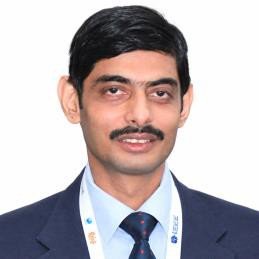
Sumit K. Chattopadhyay
PhD, IIT Kharagpur
Assistant Professor,
Dept. of Energy Science & Engineering,
IIT Delhi
Solar Photovoltaic Inverters: A Critical Review of Existing Solutions and Emerging Trends
Solar photovoltaic (PV) inverters play a pivotal role in enabling efficient, reliable, and grid-compliant integration of solar energy. With the drastic reduction of PV module cost in the last 10–15 years and rapidly growing solar PV installations, inverter technology has evolved from conventional DC–AC conversion toward intelligent, multifunctional power-electronic interfaces capable of supporting modern and future power systems. This tutorial session will present a critical review of existing PV inverter architectures, including central, string, multi-string, microinverter, transformer-isolated, and transformerless configurations, together with widely adopted two-level, three-level and multilevel converter topologies. Their relative merits will be examined in terms of efficiency, power density, leakage current, harmonic performance, reliability, cost, scalability, and grid-support capability.
The session will further address maximum power point tracking, grid synchronization, current control, filtering, thermal management, and reliability considerations that significantly influence practical inverter design. Emerging developments, including SiC- and GaN-based wide-bandgap converters, high-frequency and soft-switching techniques, multilevel architectures, and energy-storage-integrated hybrid inverters, will be critically evaluated. Particular emphasis will be placed on modulation, control, artificial intelligence and machine-learning-assisted operation, predictive maintenance, and PV–battery integration. The session will conclude by identifying key technological challenges and research directions toward highly efficient, reliable, intelligent, and grid-supportive next-generation PV inverters.
Read Full Biography
Sumit K. Chattopadhyay received his PhD in Electrical Engineering from IIT Kharagpur in 2016. He has nearly 5 years of industrial experience working in the areas of power electronic converters for renewable energy, naval defence and HVDC. He has proposed a new series of multilevel inverter topology using a Level Doubling Network, and has filed several patents and published papers on this topic. His areas of research interest are power electronic converter topology, modulation and control for renewable energy and smart grid.
After his B.E. in Electrical Engineering from Burdwan University (2004) and M.Tech. in Industrial Electrical Systems from NIT Durgapur (2006), he joined Larsen & Toubro Ltd., Navi Mumbai, where he was responsible for power electronic system design of multiple industrial and mission-critical naval projects executed for the first time in India, until January 2010. From January 2010 to March 2015, he was a full-time Research Scholar with the Department of Electrical Engineering, IIT Kharagpur, working on topology, modulation, control and application of high-resolution multilevel inverters for renewable energy applications.
From March 2015 to July 2016 he served as Scientist of HVDC Grid System R&D with ABB Global Industries Service Ltd. in India, receiving comprehensive training on VSC-based HVDC systems at ABB's Corporate Research Centre in Sweden. In July 2016 he rejoined IIT Kharagpur as the first PDF of the Electrical Engineering Dept. to further explore the use of Level Doubling Network in various applications, and was associated with several PhD candidates and the UK–India consortium on Clean Energy. One of his proposed topologies is being installed on the rooftop of the Nalanda Complex of IIT Kharagpur to evacuate power from a 90 kWp solar PV array into the local grid. Dr. Chattopadhyay joined the Department of Energy Science and Engineering of IIT Delhi as Assistant Professor in June 2018.